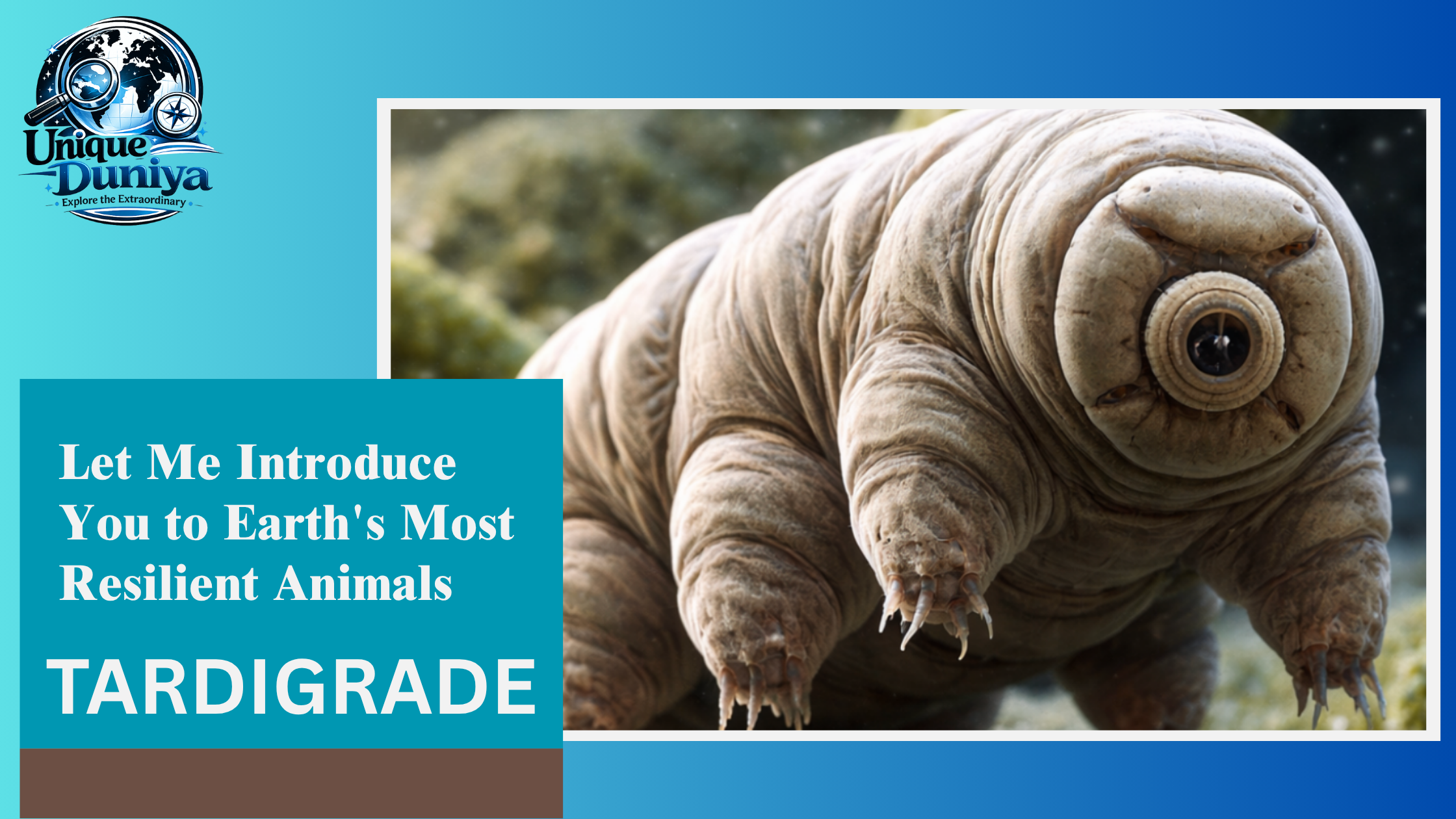
Tardigrades water bear- the most resilient creatures on earth
What if I told you there is an animal on Earth that can survive outer space? Deadly radiation, freezing temperatures, and even decades without food or water?
It sounds like something from a science fiction movie. But it’s real.
Meet the tardigrade, also known as the “water bear.” Cute water bear tardigrades are usually less than a millimeter long, yet they possess survival abilities that leave scientists amazed. In fact, many researchers consider them some of the toughest animals ever discovered. Let me walk you through some amazing facts about tardigrades.
The Ultimate Survivor
Tardigrades can endure conditions that would instantly kill most forms of life.
They have survived the vacuum of space, extreme radiation, and temperatures ranging from nearly absolute zero (-272°C) to a scorching 150°C. Some species of tardigrade bear have even survived exposure to space for several days. Returned to normal once they were rehydrated back on Earth.
Imagine being frozen, baked, blasted with radiation, and sent into space—and still making it back alive. That’s a normal day in the life of a space bear tardigrade.
Their Secret Weapon: The “Tun” State
When water disappears from their environment, tardigrades don’t panic.
Instead, tardigrade water bears perform one of nature’s most incredible survival tricks. They squeeze out almost all the water from their bodies and curl into a tiny dry ball known as a “tun.”
In this state, their metabolism drops to just 0.01% of normal. They are essentially in suspended animation. They stop growing, eating, and reproducing while waiting for better conditions. Some tardigrades have remained in this state for years. Even decades before coming back to life when water returns. It’s almost like pressing a pause button on life.
Built-In DNA Armor
One reason tardigrades bear is so difficult to kill is their remarkable DNA protection system.
Scientists discovered a special protein called Dsup, short for “damage suppressor.” This protein acts like a protective shield around their DNA. It helps tardigrades under a microscope to reduce damage caused by radiation and other environmental stresses.
Consider it microscopic body armor that protects their genetic instructions from harm. Researchers are even studying this protein to see whether it could one day help protect human cells from radiation exposure.
A Creature with Borrowed Genes
Here’s where things get even stranger.
Scientists have found evidence that a significant portion of tardigrade DNA appears to come from other organisms, including bacteria, fungi, and plants. Over millions of years, these foreign genes may have become part of the tardigrade genome, giving them extra tools for survival. This makes their genetic makeup one of the most fascinating in the animal kingdom.
It’s almost as if tardigrades have been collecting useful biological upgrades throughout their evolutionary journey.
Survivors from a Lost World
Tardigrades are not newcomers to Earth.
Fossil evidence suggests they have existed for more than 500 million years. That means they were around long before dinosaurs appeared. They have also survived every major mass extinction event our planet has experienced. While countless species disappeared forever, tardigrades quietly carried on.
Final Thoughts
Tardigrades may be tiny, but their story is enormous.
The water bear, tardigrade, can survive space, radiation, extreme heat, extreme cold, and decades without water. They protect their DNA with a natural shield and have endured on Earth for over half a billion years.
If you think size determines strength, remember the tardigrade. Because Earth’s greatest survivor isn’t a lion, a shark, or an elephant. It’s a microscopic water bear that refuses to quit. Visit Unique Duniya to explore such amazing facts about the world.
FAQs
- Is a tardigrade harmful to humans?
No. Tardigrades water bears, are usually harmless to humans. Tardigrade is a microscopic animals which do not carry diseases. These are not parasitic and do not bite.
- Can a human eye see a tardigrade?
Yes, under perfect lighting conditions, we can see a large tardigrade with the naked eye. It may appear as a tiny, translucent speck. To see their unique “water bear” features, claws, or distinct movements, we need a microscope.
- How old was the oldest tardigrade?
The evolutionary lineage of tardigrades dates back more than 500 million years to the Cambrian period. However, the oldest definitively identified tardigrade fossil is a 16-million-year-old specimen preserved in Dominican amber.
About the Author




Почва широко применяется в аграрном производстве для выращивания культур.
В теплицах грунт служит основой для салатных культур.
На открытых полях почва используется для высадки злаковых и промышленных растений.
торф ногинск
Субстраты нужны для создания лужаек и садового оформления.
В дендрариях земля играет ключевую роль при получении рассады.
Кроме того грунт применяется для восстановления истощённых территорий.