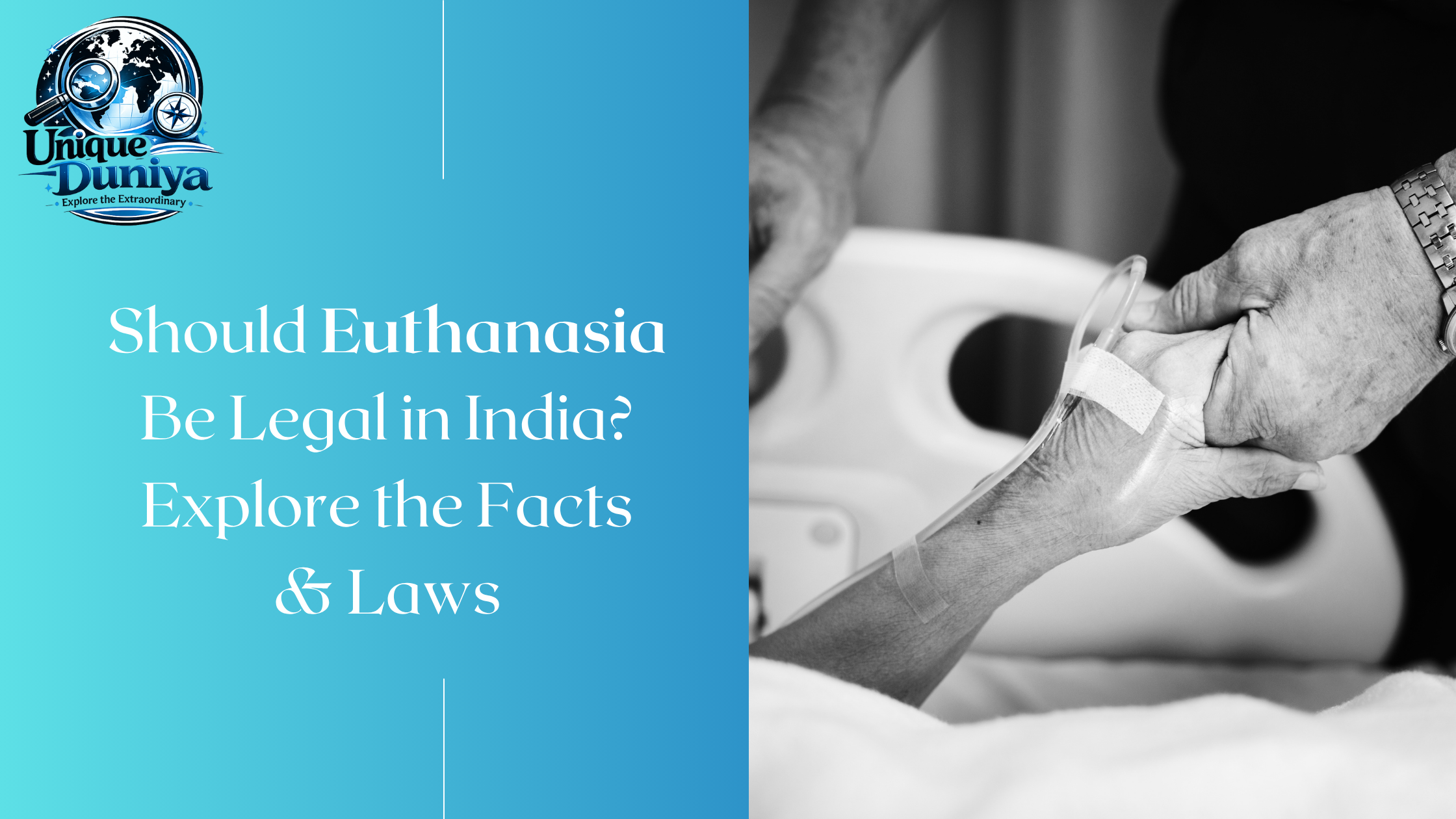
Euthanasia should be legal or not?
None of the decisions can be more painful than deciding whether a loved one should continue living or die. Families face emotional, medical, ethical, and financial challenges when a patient remains in a permanent vegetative state or suffers from a terminal illness with unbearable pain.
In such situations, the debate around euthanasia becomes deeply personal. Some people believe that every individual deserves the right to die with dignity. Others argue that human life should be preserved under all circumstances. The question continues to spark discussion across India: Should euthanasia be legal or not? Let’s explore both sides of the debate deeply.
What Is Euthanasia?
Euthanasia refers to intentionally ending a person’s life to relieve suffering caused by a serious or incurable medical condition.
The word comes from Greek and means “good death.” It is generally discussed in cases where a patient is terminally ill. The patient is experiencing extreme pain or has no realistic chance of recovery. The goal of euthanasia is not to cure a disease but to end suffering.
What Are the Types of Euthanasia?
Euthanasia can be classified in several ways based on how it is carried out. The primary 5 types of Euthanasia are listed here—
Active Euthanasia
Active euthanasia occurs when a medical professional directly administers a substance that causes the patient’s death. For example, a doctor may give a lethal injection specifically intended to end life.
Active euthanasia is illegal in India and in many countries around the world. It is one of the most controversial forms of euthanasia. It involves a direct action that causes death.
Passive Euthanasia
Passive euthanasia involves allowing death to occur naturally by withholding or withdrawing life-sustaining treatment. Examples include:
- Removing a ventilator
- Stopping artificial feeding
- Discontinuing life-support systems
In passive euthanasia, death results from the underlying medical condition rather than a direct action by a doctor. India allows passive euthanasia under strict legal safeguards.
Voluntary Euthanasia
Voluntary euthanasia takes place when a mentally competent patient clearly requests it and gives informed consent. The patient understands the consequences and voluntarily chooses the procedure. Many countries that allow euthanasia require explicit patient consent before any end-of-life decision can be considered.
Non-Voluntary Euthanasia
Non-voluntary euthanasia occurs when the patient cannot provide consent. This may happen when a person is:
- In a permanent vegetative state
- In a coma
- Suffering from severe brain damage
- Incapable of making medical decisions
In such cases, family members, legal guardians, or courts may become involved in decision-making.
Involuntary Euthanasia
Involuntary euthanasia is performed against the patient’s wishes or without asking for consent. This is universally considered unlawful and is treated as murder in virtually every legal system. There is broad international agreement that involuntary euthanasia should never be permitted.
What Exactly Happens in Euthanasia?
The process of euthanasia depends on the laws of a country and the type of euthanasia involved.
In passive euthanasia, doctors may withdraw life-sustaining treatments like ventilators, feeding tubes, or other medical support after legal approval. The patient is usually provided with palliative care, pain management, and comfort measures throughout the process.
The aim is to ensure that the patient does not suffer while natural death occurs due to the underlying illness. Strict medical reviews and legal safeguards are required before any decision is implemented.
What Are the 5 Stages of Euthanasia?
While procedures vary by country, the following stages are commonly discussed in legal euthanasia frameworks.
1. Initial Euthanasia Request
The process begins when a patient or family member raises a request for euthanasia or withdrawal of life support. Medical professionals evaluate the patient’s condition and prognosis.
2. Written Declaration
A formal written declaration is prepared.
In some countries, this may be a “living will” or advance medical directive that records the patient’s wishes regarding end-of-life treatment. India recognizes living wills under Supreme Court guidelines.
3. Second Opinion Appointment
An independent medical expert reviews the patient’s condition. This step helps ensure that the diagnosis is accurate and that there is no reasonable chance of recovery.
4. Scheduling Euthanasia
If all legal and medical requirements are satisfied, a date and procedure are scheduled. Family members are informed, and necessary documentation is completed.
5. Euthanasia Death
The final step involves implementing the approved decision.
In passive euthanasia, life-support measures are withdrawn while comfort care continues. The patient’s death occurs naturally due to the underlying medical condition.
Is Euthanasia Legal in India?
The answer depends on the type of euthanasia.
Active Euthanasia
Active euthanasia is illegal in India. No doctor can intentionally administer a lethal substance to end a patient’s life.
Passive Euthanasia
Passive euthanasia is legal under specific conditions.
The legal framework was developed through Supreme Court judgments, particularly the 2011 Aruna Shanbaug case and the landmark 2018 ruling that recognized passive euthanasia and living wills. The Court held that the right to live with dignity also includes the right to die with dignity in certain circumstances. Today, passive euthanasia can be permitted when strict medical and legal safeguards are followed.
Recent Euthanasia Case in India: The Harish Rana Case
One of the most significant developments in India’s euthanasia debate is the Harish Rana case.
Harish Rana was a former engineering student who suffered a severe brain injury after a fall in 2013. The accident left him in a permanent vegetative state. He remained dependent on medical support for more than 13 years with no meaningful chance of recovery.
In March 2026, the Supreme Court allowed the withdrawal of life-sustaining treatment in his case. The decision is widely regarded as the first judicial implementation of India’s passive euthanasia framework. The Court concluded that continuing artificial life support in a situation with no hope of recovery could conflict with the principle of dignity.
Following the ruling, life-support measures were withdrawn at AIIMS Delhi, and Harish Rana later passed away. The case reignited national discussions about end-of-life care, patient autonomy, and the limits of medical intervention.
Which Countries Have Legalized Euthanasia?
The legal status of euthanasia varies across the world. Countries that permit euthanasia or medically assisted dying under certain conditions include:
- The Netherlands
- Belgium
- Luxembourg
- Canada
- Spain
- New Zealand
- Colombia
- Ecuador
- Parts of Australia
Some countries, such as Switzerland, permit assisted dying under specific legal frameworks. Each country has its own eligibility requirements, medical reviews, and legal safeguards.
Conclusion
Euthanasia remains one of the most complex ethical and legal issues in modern healthcare.
Supporters argue that it gives people the right to die with dignity and freedom from unbearable suffering. Opponents believe that legalizing euthanasia could create risks for vulnerable patients and weaken respect for human life.
India currently permits passive euthanasia under strict judicial and medical oversight while continuing to prohibit active euthanasia. Recent cases such as Harish Rana’s have brought renewed attention to the issue and may influence future discussions on end-of-life care. Whether euthanasia should be expanded further remains a matter of ongoing public, medical, and legal debate.
FAQs
Is euthanasia completely legal in India?
No. Active euthanasia is illegal. However, passive euthanasia is legal under specific conditions and safeguards established by the Supreme Court.
What is the difference between active and passive euthanasia?
Active euthanasia involves directly causing death, such as through a lethal injection. Passive euthanasia involves withdrawing life-support treatment and allowing natural death to occur.
What is a living will?
A living will is a legal document that records a person’s wishes regarding medical treatment if they become unable to make decisions in the future. The Supreme Court recognized living wills in 2018.
Why is the Harish Rana case important?
It is considered the first judicial implementation of India’s passive euthanasia framework. The Supreme Court allowed withdrawal of life support after he remained in a permanent vegetative state for over 13 years.
Which form of euthanasia is illegal everywhere?
Involuntary euthanasia, where a person’s life is ended against their wishes, is considered unlawful and is generally treated as murder.
Can family members request passive euthanasia in India?
Yes, but the request must go through strict medical and legal procedures. Courts and medical boards may review the patient’s condition before granting approval.
About the Author