Glass Frog: A transparent species
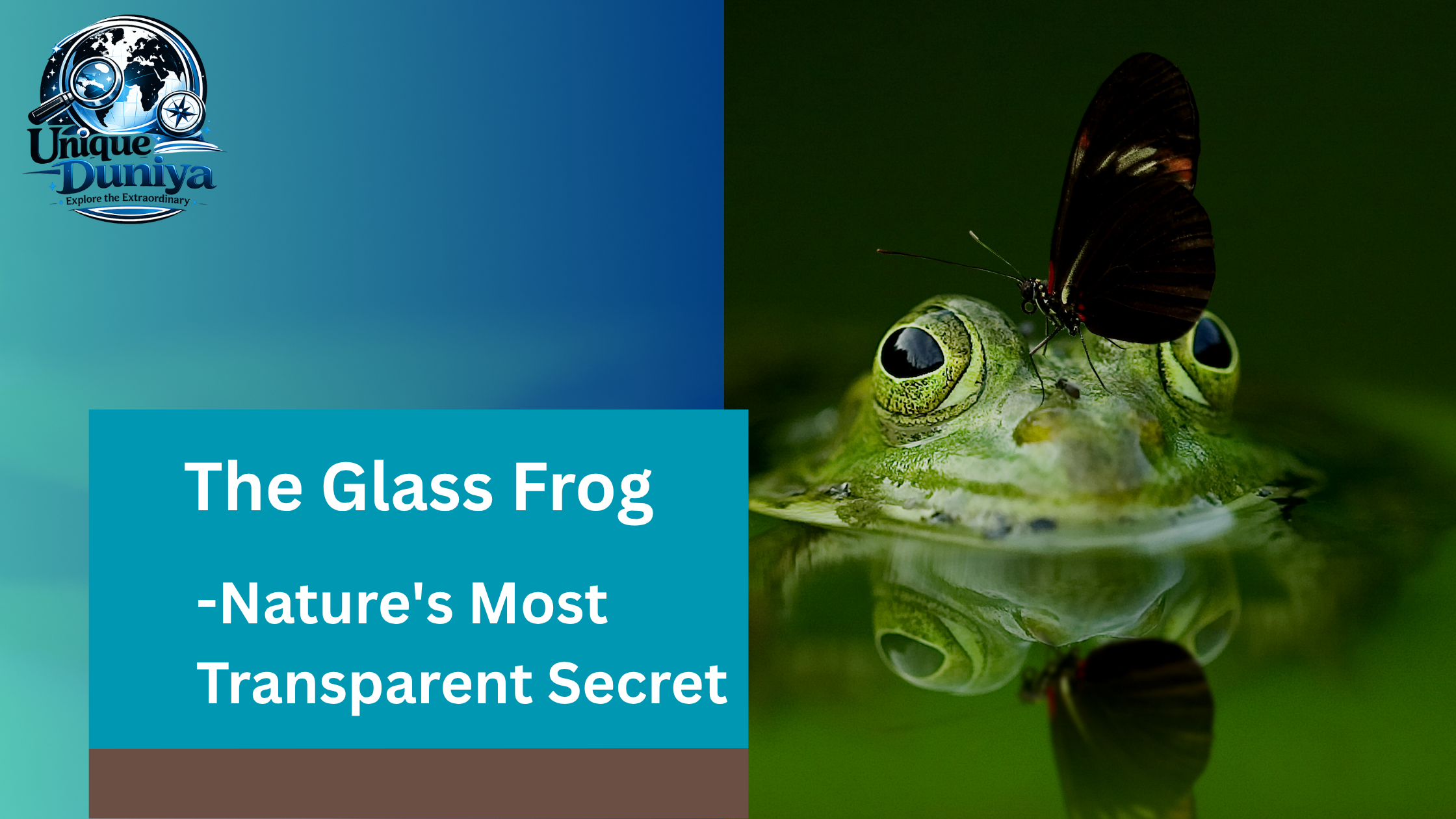
Nature has a way of surprising us. And few creatures do it better than the glass frog. At first glance, glass frogs look like any small, green tree frog sitting on a leaf. But flip it over, and you’ll see something that feels almost unreal — a window into a living body. You can see the heart beating and blood moving through tiny vessels. You can see the liver, the intestines, all of it.
Glass frogs belong to the family Centrolenidae and are found in the rainforests of Central and South America. They are small and quiet and among the most fascinating animals on Earth.
Why Are Glass Frogs Unique?
Glass frogs are famous for their transparent underbellies. The skin on the frog’s abdomen and underside is so thin that you can see its internal organs, including the heart, liver, and intestines, right through the skin.
But here’s what makes it truly remarkable. Transparency is a common form of camouflage among aquatic animals—for example, in ice fish and larval eels—but it’s extremely rare on land. For vertebrates, achieving transparency is difficult because their circulatory systems are full of red blood cells that interact with light. Glass frogs have found a way around this. That’s what sets transparent glass frogs apart from nearly every other animal on the planet.
Where Can We Find Glass Frogs?
Glass frogs are native to Central America, South America, and Mexico. Glass tree frogs live in rainforests and mountainous forests across Central and South America. They spend the dry season high in the canopy and spend the mating season lower to the ground.
Regions like Costa Rica are hotspots for species richness. These leaf-sitting neotropical frogs often cling to the undersides of leaves. That habit is key to their survival. It keeps them hidden while also showing off their remarkable transparency from below.
Amazing Facts About Glass Frogs
Explore some of the most unique facts about glass frogs.
Incredible Transparency
Compared with other tree frogs, which only store about 12% of their red blood cells in their livers, glass frogs can store a whopping 90% — nearly all of their red blood cells. They do this while sleeping, which is when they’re most vulnerable to predators. In their most transparent state, they’re almost entirely see-through, with darker patches only where their eyes and internal organs are.
Windowed Camouflage
This camouflage phenomenon, in which the frog’s edges are softened to match the relative brightness of its surroundings, is referred to as edge diffusion. Experiments with computer-generated images and gelatine models found that the translucent frogs were less visible and were attacked by birds significantly less often.
Bone Pigmentation
Some species take transparency even further. There are around 160 species of glass frogs in total, all of which belong to the same family, Centrolenidae. Some of these species have evolved pale green bones, making them even harder to spot against leaf backdrops.
Potential Medical Breakthroughs
Here’s something you might not expect. Despite packing and unpacking red blood cells into a small space on a daily basis, the frogs don’t experience potentially dangerous clotting. It is an exciting finding that opens the door for biomedical research.
What Is the Lifespan of Glass Frogs?
Glass frogs typically live between 4 and 14 years. It depends on the species and whether they live in the wild or in captivity.
- Wild Lifespan (Larger Species): 10 to 14 years
- Wild Lifespan (Emerald Glass Frog): Around 4 to 5 years
- Captive Lifespan (Reticulated Glass Frog): Generally 5 to 8 years in a terrarium environment
Smaller species tend to have shorter lives. Environmental conditions, predators, and habitat quality all play a role.
Conclusion
The glass frog is proof that extraordinary things come in very small packages. It solved one of biology’s hardest problems — how to become transparent on land — without any fancy tricks. Just pure, evolved biology. From hiding blood in the liver to softening body edges with light, every adaptation has a purpose. These frogs also remind us that nature still holds secrets worth protecting. Habitat loss is a real threat to their survival, and understanding them better could even help human medicine. It’s worth paying attention to the small creatures that most people never notice. Visit Unique Duniya to explore some special animal and plant species.
FAQs
- What is another way a glass frog’s skin is unique?
Glass frogs are a classic example of animal transparency and are well known for their transparent ventral skin. But that’s not all. Glass frogs have two levels of transparency—partial transparency when they’re awake and their red blood cells are circulating normally, and improved transparency when sleeping and hiding most of their red blood cells in their livers. The skin also diffuses light around the edges of the body, blurring the outline so predators can’t clearly spot them.
- Why do frogs scream at night?
The usual cause of a frog’s shrill, piercing shriek is alarm at a predator. The noise can last for more than five seconds and resembles the scream of a startled baby. Most scientists agree that the scream probably evolved as a mechanism to startle attackers, but it could also serve to attract secondary predators.
- Can frogs change their skin color?
Yes, many frogs can. Frogs change color to help hide from predators by matching the colors of their surroundings. They also change color to help control their body temperature, as some colors absorb more or less light and can cool or warm them up. They use pigment cells called chromatophores to change color. Most frogs cannot completely change their color—instead, they change the shade (lighter or darker) of their basic color. It’s more subtle than a chameleon, but it works.
About the Author